

AI has rewired lead gen. Zero‑click AI answers slash organic CTR (7.3%→2.6%) while non‑branded demand falls 20% and branded rises 19%. Intent now surfaces weeks earlier via predictive signals, with IP resolution revealing up to 80% of anonymous traffic. Chatbots convert 3x better than forms; AI‑scored leads compress cycles 62% and cut CAC up to 60%. Optimizing for in‑SERP citations lifts clicks 35%. Teams using hyper‑personalized nurturing see 2–3x conversions—and the next moves are decisive.
Key Takeaways
- AI overviews reduced organic CTR, shifting lead gen from blue-link clicks to zero-click visibility and in-SERP answer optimization.
- Earlier intent detection now drives outreach, using predictive analytics, IP-to-company resolution, and behavior scoring to identify buyers weeks ahead.
- Chatbots and conversational AI outperform forms, accelerating response times and tripling engagement while improving lead qualification.
- AI-driven personalization and next-best-action systems raise conversion rates, compress sales cycles, and lower CAC with more accurate lead scoring.
- Branded queries and cited mentions gain visibility lifts, while non-branded traffic declines, pushing brands to optimize snippets and concise frameworks.
AI Search and Lead Generation: What Changed

Even as AI search captures headlines, the data shows Google still anchors lead gen while the ground quietly shifts. Google still processes 14 billion searches daily versus ChatGPT’s 2.5 billion prompts, yet Search Evolution is visible in Engagement Metrics: when AI Overviews appear, #1 organic CTR slid from ~7.3% to 2.6%, with non-branded terms hit hardest (-19.98%) while branded queries rose (+18.7%). For most businesses, Google organic drives the majority of traffic, leads, and revenue, underscoring that AI search platforms have not replaced traditional SEO.
Google still anchors lead gen as AI overviews erode top-organic clicks, reshaping intent and engagement dynamics.
Traditional listings still drive most clicks and conversions, but Traffic Shifts are real.
AI Integration now affects User Behavior and Market Dynamics more than volume. AI-referred traffic converts only 9% lower on average, and research-heavy verticals report higher revenue per visit, signaling fewer leads but higher intent. The decreasing lead conversion rates analysis highlights the need for businesses to reassess their outreach strategies. Companies that adapt their marketing efforts to focus on high-intent traffic are likely to see improved outcomes despite lower lead volumes. By honing in on the quality of leads rather than quantity, organizations can drive more meaningful engagement and ultimately, higher sales.
In the Competitive Landscape, Content Optimization becomes a moat: rich product data, expert commentary, ROI calculators, and structured pages earn citations in AI Overviews and earlier awareness.
With 86% of SEO pros adopting AI, leaders operationalize AI to compound ROI and safeguard demand.
AI Buyer Journeys: New Intent Signals to Track

Search may still anchor lead gen, but intent now crystallizes earlier and signals surface faster. Teams that upgrade intent signal identification and buyer journey mapping now see AI driven insights reveal pre-demand movements: funding rounds, leadership changes, tech adoptions, and hiring spurts forecast buying cycles weeks ahead. In this evolving landscape, modern lead generation strategies are essential for staying ahead of the competition. By leveraging data analytics and personalization, companies can refine their outreach efforts to better align with potential clients’ needs. Embracing these techniques not only enhances engagement but also drives conversion rates significantly.
Predictive analytics integration mines over a trillion daily events to elevate behavior based scoring and dynamic lead tracking across anonymous and known accounts. These systems differentiate casual browsers from serious buyers by monitoring Signal-First indicators throughout the journey.
Engagement pattern recognition advances beyond clicks. Intent signal analysis captures pricing-page loops, competitor queries, referral paths, scroll speed, and G2/LinkedIn activity, while IP-to-company resolution unmasks up to 80% of anonymous traffic.
Conversation AI flags readiness moments in Zoom or Teams, correlating sentiment with late-stage questions on onboarding, security, and CRM integrations.
Platforms like Demandbase, ZoomInfo, Dreamdata, SalesIntel, and Momentum operationalize these signals into account-level readiness. The future edge belongs to marketers who stitch early research cues to late evaluation behaviors and trigger precise next-best actions.
Lead Quality Gains With AI: What Actually Improved

AI shifts lead quality by scoring behavioral signals with up to 90% accuracy and adapting in real time as prospects click, linger, and respond.
Hyper-personalized nurturing—run by AI agents—pushes conversion rates 2–3x higher and lifts win rates 30%+ by matching content, timing, and offers to micro-intent.
The strategic bet is clear: teams that operationalize signal scoring and personalization at scale will pass 28% more qualified leads to sales while cutting acquisition costs by up to 60%. Businesses adopting AI for lead generation report a 15× ROI, reinforcing the case for rapid integration.
Behavioral Signal Scoring
While traditional lead scoring awards static points for actions like a profile view, behavioral signal scoring uses models trained on historical conversions to weigh sequences, recency, and cross-channel context.
Using behavioral analytics, modern scoring models fuse dynamic signals and engagement metrics across LinkedIn, web, email, and product usage to power intent recognition and predictive scoring. Data normalization and de-noising remove bots and bulk events, while time-decay prioritizes fresh behavior. Patterns like pricing-page → competitor-page → message reply correlate with higher lead conversion. To set up effectively, teams should integrate LinkedIn activity data, CRM records, and a well-defined ICP to align behavioral scoring with target-market fit.
AI blends person activity with account fit, continuously learning from outcomes. Vendors report +38% PQL-to-meeting, -29% SDR touches, and +21% trial-to-paid as models retrain on revenue, ACV, and retention.
With up to 77% forecast reliability, systems suggest next-best actions, ideal contact times, and route PQL-A within two hours.
Hyper-Personalized Nurturing
Even as budgets tighten, hyper-personalized nurturing is where lead quality actually inflects. AI now orchestrates dynamic engagement across channels, turning generic drips into personalized outreach that compounds intent.
It analyzes industry, role, company, and prior behavior to generate bespoke copy, subject lines, and CTAs—at consistency and scale humans can’t match. Timing shifts from presets to predictions; models send when each prospect is most likely to engage and adapt instantly via sentiment analysis. By combining intelligent scoring with sophisticated segmentation, teams prioritize high-fit, high-engagement leads for immediate sales follow-up, improving efficiency and conversion.
Real-time chat lifts B2B conversions up to 20%, while interactive content doubles conversions and quintuples pageviews. Machine learning refines scores continuously, surfacing low-risk, high-propensity buyers; teams report 50% more sales-ready leads, and nurtured prospects are 47% likelier to purchase.
Zero-party data and privacy-safe inference sustain precision without surveillance.
Conversational AI for Capture: Chat, Voice, and Messaging
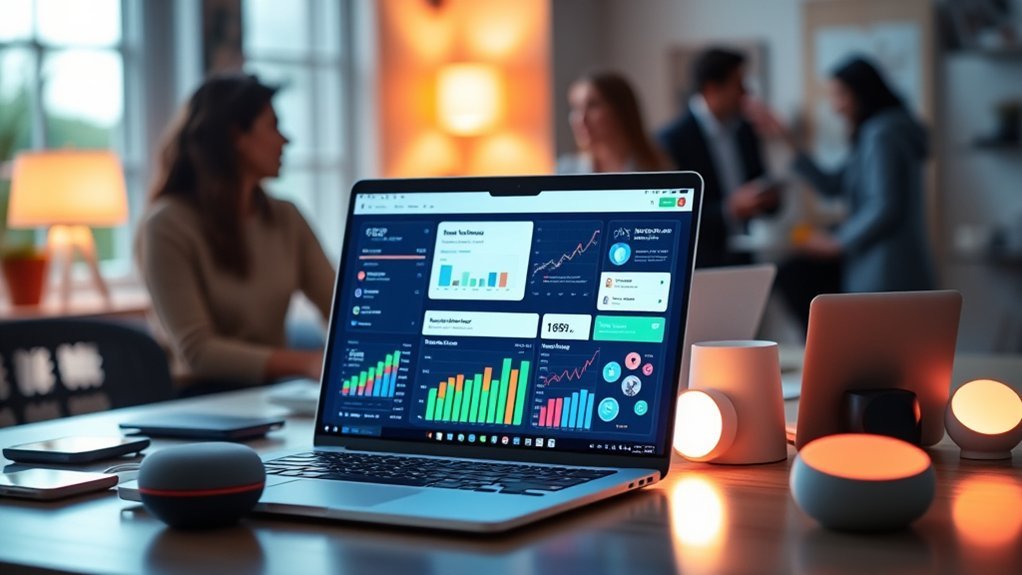
Conversational gravity is shifting lead capture from static forms to real-time chat, voice, and messaging that qualify and convert on contact. Data shows chatbot engagement now beats forms 3x, with modern systems lifting conversions 20–30% and 26% of B2B teams reporting 10–20% more lead volume.
Customers expect real time responses—68% do—and AI personalization tailors conversational funnels to customer preferences while predictive lead scoring prioritizes intent.
Voice interactions and messaging integration extend multichannel outreach across SMS, email, WhatsApp, Facebook, and Instagram, with multilingual support in 45+ languages. Tools like Landbot and Cassie route inquiries, trigger automated follow ups, and orchestrate cross-channel flows.
As NLP matured, 64% of businesses saw more qualified leads and chatbots now resolve 75% of inquiries autonomously.
The market’s accelerating: conversational AI grows 23.7% CAGR to $41.39B by 2030; contact-center deployments rise 18.66% CAGR. Retail leads with 21.2% share as cost pressures and 24/7 expectations make AI-led capture a competitive baseline.
Personalization at Scale: RAG and Context Graphs in Practice

Because precision now decides winners, personalization at scale hinges on Retrieval-Augmented Generation (RAG) and emerging context graphs that turn fragmented data into real-time intent signals.
RAG applications dynamically pull from vector stores and proprietary data, then generate context-aware responses that cut hallucinations and drive measurable lift. With a market projected to hit USD 10.2 billion by 2030 at a 49.1% CAGR, leaders pair AI integrations with context graphs that map entities, sessions, and events into intent paths.
Personalization strategies shift from segments to moments: clickstream vectors, image embeddings, and inventory APIs fuel digital stylists, product copy, and timely recommendations.
Retail’s 41.71% CAGR showcases the playbook; customer support chatbots already hold 18% revenue share. Hybrid patterns trim TCO by 18% while SMEs scale via RAG-as-a-Service.
North America leads active RAG with agentic planning, improving KYC/AML, policy monitoring, and portfolio alerts. Vector databases (19.12% share; 40.02% CAGR) anchor retrieval performance, turning precision into profit.
Search Visibility in a Zero-Click World (for B2B Leads)

Precision built on RAG and context graphs now meets a harsher reality: zero‑click search rewires discovery before a prospect ever lands on a site.
With 60% of queries ending without a click—and 83% when AI Overviews trigger—B2B brand visibility depends on zero click strategies, not blue links.
Organic traffic shrinks as CTR drops 20–61% across software categories; top results lose 34.5% when an overview appears.
Yet search engagement hasn’t vanished—it’s relocated.
Leaders reframe content optimization for in-SERP answers: structured snippets, concise frameworks, and syndicated citations that AI integration can quote.
Brands cited in overviews report a 35% organic click lift, while native document posts drive 25.35% engagement versus 21.69% for links.
Pair predictive analytics with audience targeting to seed “day-one” vendor lists and accelerate lead nurturing.
Prioritize content distribution that feeds AI-generated thematic pages, PDFs, and carousels.
Design user experience for single-click consumption, anticipating fragmented discovery and treating the website as a validation layer, not the starting line.
Metrics to Track Now: Velocity, CAC, SQO, ROI

While search behavior shifts, leadership shouldn’t wait to see impact—track velocity, CAC, SQO, and ROI now to validate AI’s revenue math.
Velocity is the early tell: AI lead scoring and sales automation compress sales cycles by 62%, with 5‑minute responses via chatbots driving 9x conversions and 82% funnel velocity gains.
Monitor time from lead to close and lead response time to expose pipeline efficiency gaps.
CAC must fall in parallel. Teams report up to 60% lower acquisition costs, a 70% drop in cost per qualified lead, and 30–50% admin cuts.
Track cost per lead by source and qualification time to quantify AI’s conversion analytics advantage.
SQO quality becomes the truth serum. Predictive models fuse CRM, firmographics, intent, and customer insights to prioritize high‑fit opportunities; chatbot booking and qualification rates validate quality.
ROI closes the loop: measure revenue per lead by score tier, lead‑to‑customer conversion, and engagement metrics—287% lifts and 150% surges signal durable gains.
Your 90-Day AI Lead Gen Plan: Tools, Tactics, Benchmarks

Three moves define a 90-day AI lead gen sprint: pick the right stack, wire intent into every touchpoint, and measure speed-to-revenue relentlessly.
The plan starts with rigorous tool selection and data hygiene: Apollo or ZoomInfo for unified workflows, Clay or Seamless.AI for enrichment, 6sense for predictive account focus.
They emphasize tactic integration—predictive scoring, intent activation, conversational bots, and omnichannel sequences—plus training strategies so reps exploit copilots, not replace judgment.
Benchmark analysis targets a 25–40% lift in scoring precision and faster pipeline velocity.
1) Days 1–30: Connect tools to CRM, cleanse data, enable intent feeds, validate contacts, launch first sequences, deploy chatbots, and test scoring on historicals.
2) Days 31–60: Scale personalization, trigger real-time alerts, activate 6sense ABM, adjust scoring weights, segment high-fit cohorts, refine messaging via AI analyzers.
3) Days 61–90: Automate follow-ups on buyer signals, optimize multichannel workflows, confirm 25–40% precision gains, and quantify improvements in response rates, speed-to-lead, and cost per acquisition.
Frequently Asked Questions
How Do We Govern AI Usage to Avoid Bias and Compliance Risks?
They govern AI by codifying ethical guidelines, implementing bias mitigation, enforcing compliance frameworks, and auditing accountability measures. They disclose data lineage, validate models against diverse benchmarks, monitor drift, and verify content authenticity—anticipating 2026 scrutiny while converting transparency into competitive differentiation and measurable risk reduction.
What Data Hygiene Steps Ensure AI Models Don’T Degrade Over Time?
They enforce rigorous data quality audits, automate profiling, and real-time anomaly detection; codify validation rules and data contracts; track lineage; implement idempotent pipelines and upserts; schedule model maintenance with drift monitors and retraining; and align governance with ISO standards—future-proofing reliability.
How Should Teams Be Restructured for Ai-Driven Lead Generation?
They should restructure around cross-functional pods that fuse data, operations, and sales. Drive team collaboration, deepen role specialization, centralize first-party data, embed conversational AI units, and create AI governance. Measure predictive scoring impact, prioritize intent signals, and iterate playbooks weekly.
Which Privacy Changes (Gdpr/Ccpa) Impact AI Prospecting Workflows?
They cite GDPR/CCPA shifts: mandatory DPIAs/risk assessments, Article 22 human oversight, training-data provenance verification, explicit disclosures on profiling/pricing, access/opt-out rights with visible confirmation, GPC enforcement, and consent-platform records—reshaping AI prospecting’s privacy implications and compliance challenges while tightening governance, bias controls, and auditability.
How Do We Calculate Ai’s Marginal Impact Beyond Existing Automation?
They isolate AI’s marginal gains by A/B testing stacked on existing automation, attributing lift via incremental CPL, velocity, and win-rate deltas. They quantify AI efficiency from data integration and automation synergy, forecasting compounding effects through cohort-based MMM and multi-touch attribution.
Conclusion
AI has rewired lead generation. Teams that map intent signals across AI search, deploy conversational capture, and personalize with RAG/context graphs are already shrinking CAC 10–25% and lifting SQOs 15–30%. Zero-click visibility demands structured data, entity authority, and answer-first content. Winning orgs measure velocity, ROI, and pipeline quality weekly, not quarterly. The next 90 days should prioritize data unification, pilot AI copilots, and automation of qualification—because buyers won’t wait, and algorithms won’t reward slow adopters.