

Buyer intent differs sharply in B2B vs B2C. B2B spans 3–6+ months, involves 6–10 stakeholders, 12+ research queries, and nonlinear signals progressing from curiosity to pricing-page engagement. Decisions hinge on ROI, risk, and approvals, with 1–2% campaign conversions. B2C moves in hours or days, driven by FOMO, seasonal cues, and social promotions, with linear paths and 2.1–6% eCommerce conversions. Effective content diverges: B2B favors case studies and ROI tools; B2C leans on video, reviews, and timed offers—there’s more nuance ahead.
Key Takeaways
- B2B intent is multi-stakeholder and research-driven over months; B2C intent is individual, emotionally driven, and resolves in hours or days.
- B2B triggers progress from curiosity to decision signals across many touchpoints; B2C triggers hinge on promotions, urgency, and convenience.
- B2B search is nonlinear with 12+ queries over weeks; B2C search is linear and compressed into minutes or hours.
- B2B converts on case studies, videos, webinars, and ROI tools; B2C converts via social-led storytelling, reviews, demos, and time-bound offers.
- B2B funnels require approvals and legal reviews with 1–2% conversions; B2C checkout is linear with higher conversion rates and fewer steps.
B2B vs B2C Buyer Intent: The Key Differences Up Front

Although both aim to predict purchase likelihood, B2B and B2C buyer intent diverge sharply in complexity, timelines, and signals.
B2C buyer personas center on an individual end-user, where buyer motivations skew toward personal needs, habit, and emotional cues. Purchasing triggers often appear as single actions—content downloads, repeat visits, or promo responses—captured through behavioral insights and market segmentation.
B2B intent reflects collective decision frameworks with multi-threaded stakeholders across functions and job levels. Buyer motivations tie to business problems, specs, and ROI. Purchasing triggers materialize as patterns over weeks or months—whitepaper consumption, webinar attendance, and repeated solution comparisons. Given that most advertising reaches buyers who aren’t ready to purchase, brand building matters because today’s brand is tomorrow’s demand.
With 86% of B2B purchases delayed by reviews, approvals, and budget checks, sales alignment becomes essential.
Intent analytics show readiness is scarce: 30.8% plan purchases within 12 months, 15.2% within six months, only 7.6% next quarter.
Despite 96% of marketers succeeding with intent data, just 25% deploy tools—highlighting a significant capability gap.
How Decision Timelines Shape Buyer Intent

Because decision speed reshapes intent signals, timeline length fundamentally changes how marketers detect and act on readiness. In B2B, decision making dynamics stretch across 3–6+ months; 74.6% of new-customer deals exceed four months, and 86% stall.
These timeline implications reflect heavy stakeholder engagement (often 6–10 people), layered approval processes, and rigorous risk assessments. Intent builds cumulatively via research, demos, ROI tools, and cross-functional reviews, making relationship building central to maintaining momentum and forecasting readiness. In B2B, decisions are predominantly rational, emphasizing cost-effectiveness and risk mitigation over emotional drivers.
By contrast, B2C cycles compress to hours or days, sometimes minutes post-exposure. Individual decision makers, lower complexity, and strong emotional triggers create urgency factors that peak quickly.
Here, concise offers, social proof, pricing cues, and convenience align with rapid purchase windows.
Practically, B2B teams should score progressive behaviors across long horizons and equip champions to navigate approvals. B2C teams should capture and convert spikes in micro-moments with frictionless paths, aligning signals to immediate evaluation and commitment.
Trigger Signals: What Starts Each Buying Journey
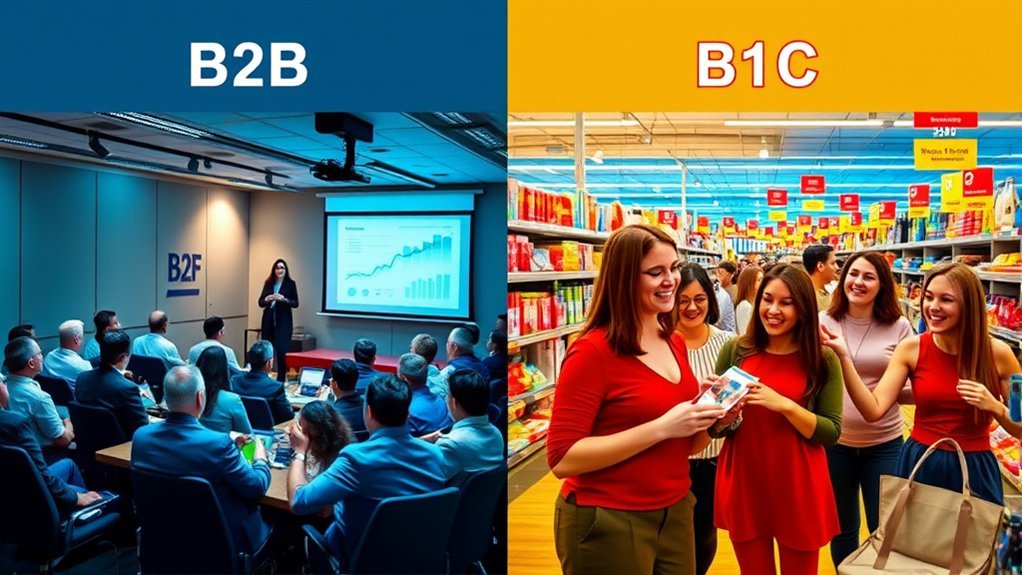
What actually sparks a buying journey differs sharply by market, and the signals arrive in distinct waves.
In B2B, trigger recognition starts with curiosity signals: job changes, new follows, light interactions with thought leadership, and top‑of‑funnel engagement indicators. Teams that spot these early cues convert more—Aberdeen reports a 73% lift from timely signal recognition. Effective sequences must align with market-specific buying psychology, ensuring outreach matches B2B vs B2C decision dynamics.
Mid‑stage triggers shift to solution fit: product pages, case studies, competitor brand searches, and added stakeholders. Pushy outreach backfires—HBR notes 81% are deterred by early sales pressure.
Late‑stage signals concentrate on decision readiness: pricing pages, repeat sessions with colleague loops, budget definition, and decision‑maker engagement; Gartner cites 27 touchpoints on average.
In B2C, emotional motivations dominate: FOMO, aspiration, frustration, and social or seasonal cues. Immediate triggers include pattern‑interrupt headlines, limited‑time offers, convenience, and brand trust—classic urgency creation.
1) Map curiosity signals to low‑friction content.
2) Align engagement indicators with solution proof.
3) Treat decision readiness with crisp, problem‑solving guidance.
Buyer Intent: Search Behavior and Research Depth

While both markets signal intent through search, their cadence and depth diverge sharply. B2B search patterns unfold over weeks, with an average of 12 queries before a vendor visit; 88% research online and 58% increased time year over year. Journeys are nonlinear—comparison, consensus, and cumulative data gathering drive research strategies and decision factors. B2C compresses intent into minutes or hours; product page depth, repeat visits, and cart abandonment are strong intent signals. High-traffic keywords fuel impulse actions, while behavior tracking and engagement metrics power AI recommendations. In addition, privacy regulations like GDPR and CCPA are pushing both B2B and B2C marketers toward first-party data strategies that require explicit consent and transparent value exchange.
| Segment | Search & Research | Key Signals |
|---|---|---|
| B2B | Multi-week, 12+ searches | “Pricing”, repeat visits |
| B2C | Minutes/hours, linear | Cart events, time-on-page |
| B2B | Stakeholder alignment | Competitor visits, spikes |
| B2C | Promotional surges | Click-through bursts |
| Both | Journey mapping essential | Content preferences shift |
B2B content preferences lean to whitepapers, case studies, webinars, and ROI tools—reflecting complex journey mapping. B2C favors speed, transactional clarity, and real-time personalization, with micro-interactions refining predictions.
Content That Converts Buyer Intent: B2B vs B2C

Data shows B2B buyers convert on research-driven assets—video (58% most effective), case studies (53%), and webinars with higher conversion (2.3%)—that support complex decisions.
B2C teams win with promotion-led content through social media and communities (57%) and higher paid social conversion (2.1%), even as blog posts earn 9.7x more shares.
Businesses using CRO tools see a 223% average ROI, highlighting the payoff of systematic optimization for both segments, with CRO tools delivering outsized returns.
Strategy reflects this split: B2B documents strategy more often (47%) and aligns with SEO’s stronger B2B conversion (2.6%), while B2C prioritizes engagement velocity and quality improvements.
Research-Driven B2B Assets
Because B2B intent forms over weeks across many signals, research-driven assets must prove fit and ROI fast. Effective research asset types map to buyer persona alignment and the long, multi-threaded process.
Prioritize b2b content formats that validate business cases: case study effectiveness for proof, whitepaper impact for depth, webinar engagement for consensus-building, ROI calculators for quantification, and competitive analysis tools for differentiation.
With 15.2% of buyers short‑term ready and 69.8% deferring beyond 12 months, assets must serve both in‑market and future cycles.
1) ROI clarity: calculators and case studies quantify value against approvals that delay 86% of deals.
2) Consensus enablement: webinars and whitepapers equip stakeholders after 12 searches.
3) Differentiation: competitive tools and product‑fit briefs counter alternatives.
Only 25% use intent tools—an advantage for disciplined orchestration.
Promotion-Led B2C Content
Although B2C marketers prize storytelling and community, promotion-led content moves intent at the consideration stage with proof and urgency. The promotion strategy centers on content formats that demonstrate value fast: video content, product demos, reviews, emails, and time-bound discounts.
With only 37% documenting strategy, teams need tighter sales alignment and audience targeting to translate interest into conversions. Brands prioritize social channels—Facebook leads, while TikTok and Discord tests grow—and pair them with email, the top ROI driver.
Engagement tactics lean data-first: interactive formats deliver 52.6% more engagement and longer view times, while blogs earn 9.7x more shares than B2B. Influencer partnerships scale brand messaging and trust; 61% plan usage.
Conversion optimization focuses on offers, retargeting, and measurement across clicks, on-page engagement, and leads.
Conversion Paths: Carts vs Committees

B2C typically follows linear checkout journeys, with eCommerce converting ~2.1–2.58% and consumer products often exceeding 6%, but mobile lags desktop.
B2B faces multi-stakeholder approvals, where overall campaigns convert 1–2%, SaaS trial-to-paid hits 14–25% vs B2C’s 57%, and multi-touch paths favor channels like LinkedIn paid at 6.1%.
Optimizing each path means streamlining carts with intent-rich paid search (3.2–3.75%) and personalized CTAs (+202%), while accelerating B2B approvals via rapid lead response (<5 minutes) and nurturing to prevent the 79% drop-off.
Linear Checkout Journeys
While both markets aim for conversion, their linear checkout paths diverge sharply: B2C carts move in fast, single-session sequences driven by emotion, mobile discovery (91% of searches), and immediate touchpoints like product pages and reviews, but stall on hidden fees and forced accounts.
Linear journey optimization in B2C focuses on minimizing taps, transparent pricing, and guest checkout to reduce abandonment. The checkout experience must load fast on mobile and surface social proof to sustain impulse velocity.
- B2C: Streamline steps, expose total cost early, and support mobile wallets to accelerate conversion; mobile influences 60% of purchases.
- B2B: Shorten repeat orders via self-service reordering (preferred by 79%) and real-time stock visibility to cut friction.
- Efficiency levers: AI-assisted platforms reduce B2B cycle time by 24%; clarity on specs and delivery dates removes evaluation drag.
Multi-Stakeholder Approvals
Speeding up a mobile cart isn’t the same as securing a committee’s yes. In B2C, a single shopper or family decides in minutes or days. In B2B, 95% of decisions involve committees, typically 6–10 stakeholders across procurement, IT, finance, end-users, and senior management.
These stakeholder dynamics create approval hierarchies that extend cycles: 46% take up to a quarter, and many run months or years.
Each role vets different risks. Finance tests ROI and budget fit; IT checks security and compatibility; end-users judge usability; procurement validates invoicing and proof-of-delivery; executives assess strategic impact.
The path isn’t linear—discovery, demos, proposals, budget reviews, legal, and final sign-off demand consensus. Effective sellers orchestrate internal champions, tailor messaging by role, and manage contracts and negotiations with disciplined cadence.
Buyer Intent Data: Sources, Signal Strength, and Quality
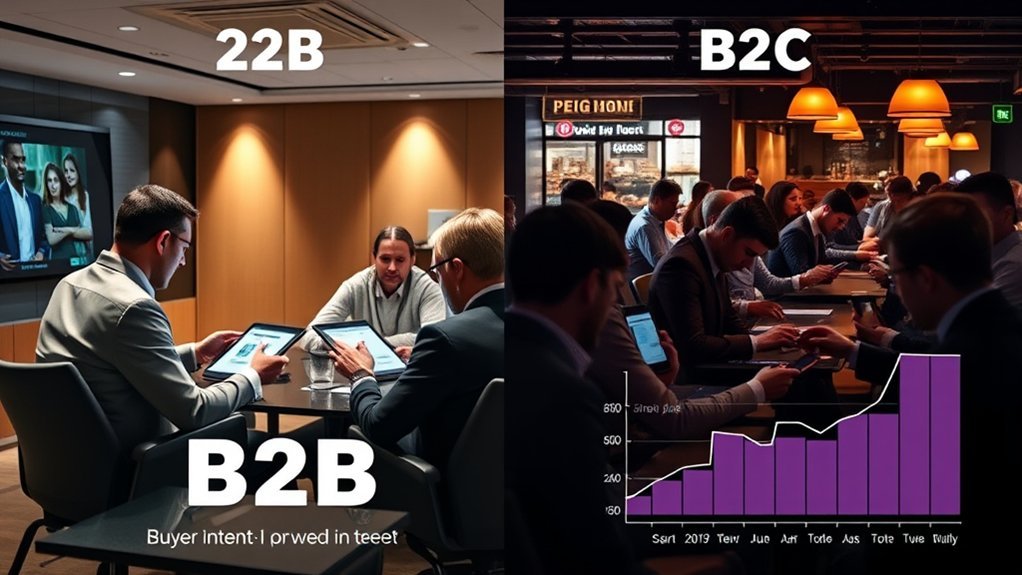
Signals, not guesses, separate strong buyer intent programs from noise. In B2B, source verification and quality assessment start with where signals originate and how they’re enriched. Bombora’s co-op spans 5,000+ sites and 12,000 topics, flagging surges above baselines; Cognism pairs it with compliant, refreshed profiles; Demandbase blends first-, second-, and third-party data.
Signals—not guesses—power B2B intent. Verify sources, enrich data, and act on validated surge patterns.
G2’s first-party traffic, ZoomInfo’s trillions of keyword observations, and TrustRadius’s longer reviews add depth. Data integration into CRMs and workflows sustains signal reliability and actionability.
1) Sources that scale:
- Bombora, Demandbase, TechTarget capture broad research journeys.
- G2 and TrustRadius contribute high-intent, platform-bound evaluations.
- ZoomInfo, Lead Forensics, Artisan AI, UserGems surface research, visits, and job-change triggers.
2) Signal strength modeling:
- Baseline spikes (Bombora), predictive AI (6sense), and prioritized lead scoring (Lusha, MadKudu).
- Real-time alerts (Intentsify) and automated suggestions (ZoomInfo).
3) Quality metrics and compliance:
- Exclusive, consent-based data (Bombora), GDPR/CCPA safeguards (Cognism, Lusha).
- Profile freshness (Cognism Diamond) and review depth (TrustRadius vs. G2).
Using Intent Data to Align Sales and Marketing Teams

Shared intent dashboards give sales and marketing the same, real-time view of pricing-page visits, demo requests, and topic surges, eliminating subjective lead debates.
Teams can codify lead handoff orchestration with ICP filters and SLAs, routing only high-intent accounts to reps at the right moment.
The result is faster follow-up, cleaner pipelines, and measurable gains in win rates and conversion.
Shared Intent Dashboards
While teams often chase different KPIs, shared intent dashboards give sales and marketing a single, real-time view of engagement, conversion, and lead scores to act on the same signals.
With shared metrics and dashboard integration, both sides see account-level intent, self-learning model outputs, and CRM-synced scores from sources like HubSpot, Google Analytics, and Salesforce.
Built-in reporting, customizable visuals, and alerts prove ROI and speed response.
- Tie data to outcomes: AI surfaces 1.1T–2T monthly signals to identify 4.2M in‑market accounts; scores weight high‑intent actions (e.g., pricing views) over generic reads.
- Embed context: Firmographic and technographic data sit alongside persona-level patterns for precise prioritization.
- Operationalize insight: Real-time alerts and CRM workflows trigger timely outreach, while common KPIs, reviews, and shared benchmarks sustain alignment and funding.
Lead Handoff Orchestration
Intent dashboards only create value when teams act on them, so lead handoff must run on clear SLAs, objective scoring, and automated triggers. In B2B, intent analysis and lead scoring push prospects to a 100-point threshold before sync from marketing automation to CRM. SLAs enforce response times and protect sales alignment by defining MQL/SQL criteria, including ICP fit and declared intent. Data integration shares activity history for personalization and faster lead nurturing. Automation workflows cut delays and shorten cycles; aligned teams are 103% more likely to hit goals, and 39% of reps report higher-quality leads. Highconsideration industries lead generation requires a strategic approach to ensure that marketing and sales teams are on the same page. By focusing on highconsideration industries, organizations can tailor their messaging and outreach, ultimately improving conversion rates. A clear understanding of target personas and rigorous segmentation enhances the effectiveness of these lead generation efforts, driving stronger engagement and loyalty.
| Lever | Mechanism | Outcome |
|---|---|---|
| Lead scoring | 100-point threshold | Fewer premature handoffs |
| Data integration | Full activity context | Faster marketing engagement |
| Feedback loops | Biweekly reviews | Continuous optimization |
Playbooks for Acting on B2B vs B2C Buyer Intent

Because buyer intent manifests differently across markets, the playbooks diverge sharply: B2B teams operationalize intent with data-rich thought leadership, multi-touch nurturing, and ABM integrations that target high-intent accounts across 5,000+ sites and 12,000+ topics; B2C teams convert intent fast with emotional hooks, short-form video, social proof, and frictionless paths.
B2B prioritizes buyer personas, intent mapping, and audience segmentation to align content strategy with consensus-driven purchase behavior. Teams deploy messaging frameworks, ROI calculators, and case studies, then sequence engagement tactics across LinkedIn, webinars, and email.
Channel optimization pairs ABM with predictive signals (funding alerts, job changes) to trigger conversion strategies when research peaks.
1) Map personas to topics, then tier accounts by intensity; attach content and SDR plays per stage.
2) Build nurture tracks that escalate proof: benchmarks, integrations, security, and total cost analyses.
3) Integrate intent data into ABM and CRM to route stakeholders, personalize cadences, and suppress noise.
B2C compresses cycles: emotional triggers, influencer-led video, and offers drive rapid action across Instagram, TikTok, YouTube, and social commerce with one-tap checkout and loyalty reinforcements.
Metrics That Prove ROI From Intent-Led Strategy
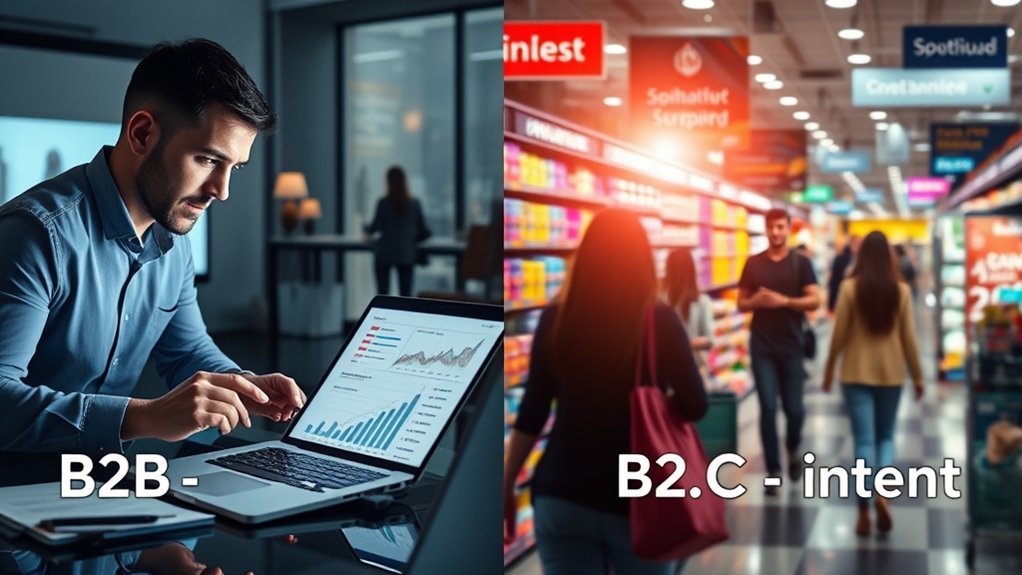
Proof lives in the numbers: an intent-led strategy earns its keep when activation, conversion, velocity, and revenue metrics move in tandem. In the context of lead generation strategies in healthcare, leveraging data analytics can significantly enhance targeting and outreach efforts. By understanding patient needs and behavior through advanced algorithms, organizations can direct resources more efficiently. This not only improves conversion rates but also fosters stronger patient relationships and brand loyalty.
Smart teams track intent metrics like Intent Activation Rate (acted-on signals/total signals) and Sales Engagement Rate for high-intent accounts (outbound touches/accounts). High-intent page views (pricing, demo) and content engagement depth (webinars, eBooks, scroll depth) verify operationalization versus unused data.
Conversion validates impact: Meeting Rate for intent accounts, Opportunity Creation Rate (opportunities/intent-qualified accounts), and Sales Acceptance Rate (SQLs accepted/intent-qualified leads).
With intent, conversion rates rise 25–35%, and 93% report lift.
Velocity proves efficiency: measure time from surge to first touch, first touch to meeting, meeting to opportunity, and compare sales cycle lengths; intent shortens cycles 30–40%.
ROI analysis closes the loop: Intent ROI = [(Revenue attributable to intent – intent investment)/investment] × 100.
Results range from 2–4x in year one to 650% and 1420% examples; 90% of CMOs cite strong ROI, 20% deal-size lift, and 60–75% predictive accuracy.
Frequently Asked Questions
How Does Privacy Compliance Differ for B2B Vs B2C Intent Data?
Privacy compliance differs because B2C demands granular, documented opt-in under privacy regulations, strict data protection, and easy revocation. B2B emphasizes consented co-ops, account-level signals, regional geo-segmentation, re-verification, and transparency, with vendors like Anteriad excelling in security, compliance, and trust.
What Tools Best De-Anonymize Account-Level B2B Intent Signals?
They’d prioritize tools like 6sense, Demandbase, Bombora, Clearbit Reveal, and ZoomInfo for de-anonymization, combining IP-to-company, identity resolution, account tracking, and intent analysis. They’d integrate first-party data, segment by role/content, and score multi-stakeholder engagement over time.
How Should Budgets Split Between First- and Third-Party Intent Sources?
They recommend budget allocation of 60–70% to first-party intent sources for accuracy and consent, 20–30% to third-party intent sources for scale, and 10% to enrichment/activation tools. They adjust split by pipeline goals, traffic volume, and coverage gaps.
How Do Regional Regulations Affect Cross-Border Intent Data Activation?
Regional regulations shape cross-border intent activation by dictating consent, data minimization, storage location, and transfer mechanisms. Teams enforce regional compliance via SCCs, DPAs, localization, and consent logs, prioritizing first-party signals, pseudonymization, and onshore processing to reduce risk, latency, and enforcement exposure.
What Governance Prevents Sales Overreliance on Weak Intent Signals?
Intent signal governance enforces thresholds, multi-threaded validation, and recency-frequency scoring, while sales strategy alignment mandates SLA-defined handoffs, QA reviews, and feedback loops. Teams benchmark conversion by segment, suppress weak sources, require corroborating actions, and audit pipeline impact to prevent overreliance.
Conclusion
In both markets, intent hinges on timing, triggers, and trust signals, but the mechanics differ. B2B decisions are longer, committee-driven, and research-heavy; B2C moves faster, with impulse and price sensitivity. High-signal data sources—product usage, firmographics, and technographics—power B2B; behavioral and transactional data dominate B2C. Teams that align content, scoring, and SLAs to intent stages convert more efficiently. Clear playbooks and ROI metrics—pipeline velocity, CAC/LTV, win rate—prove that intent-led strategies compound growth.